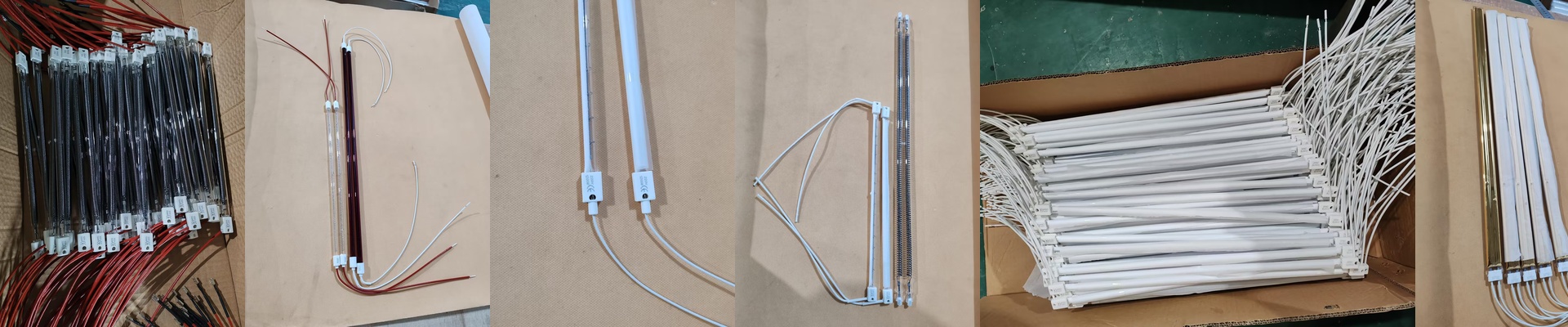
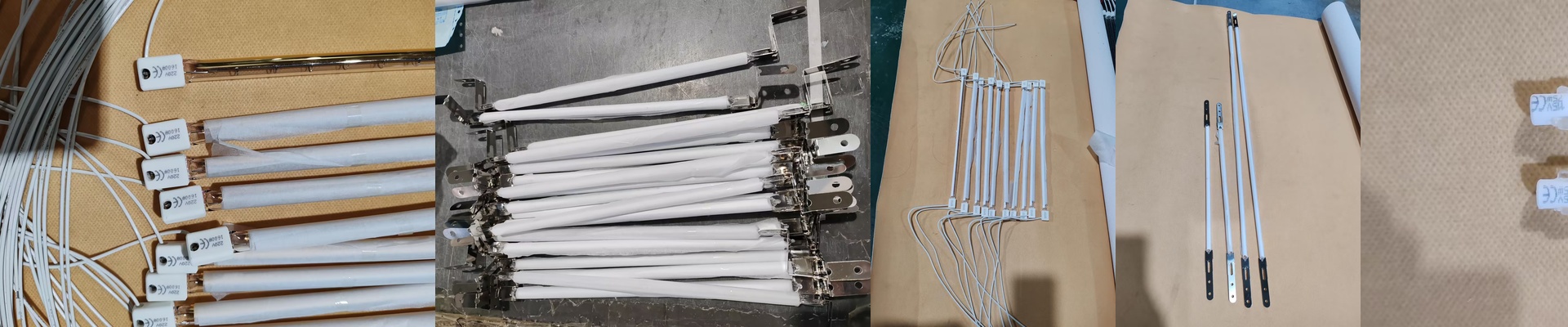
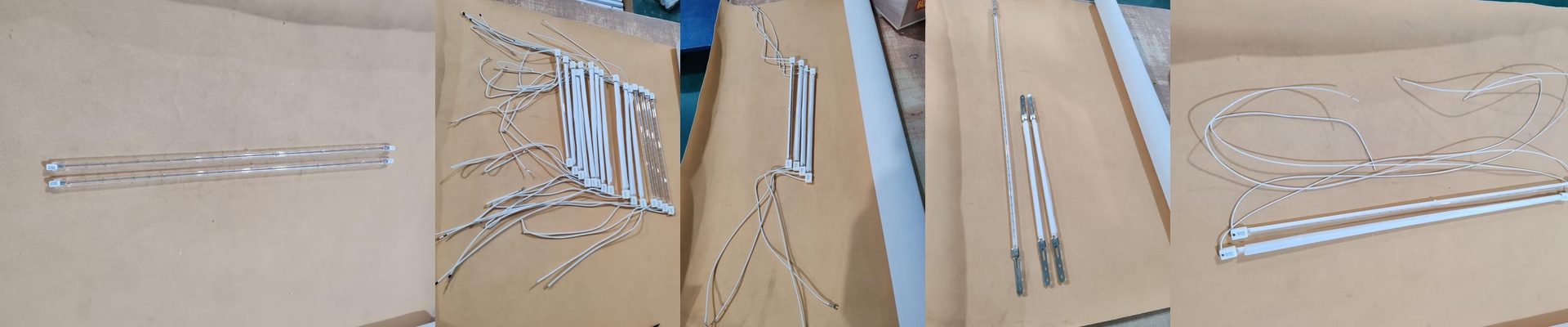
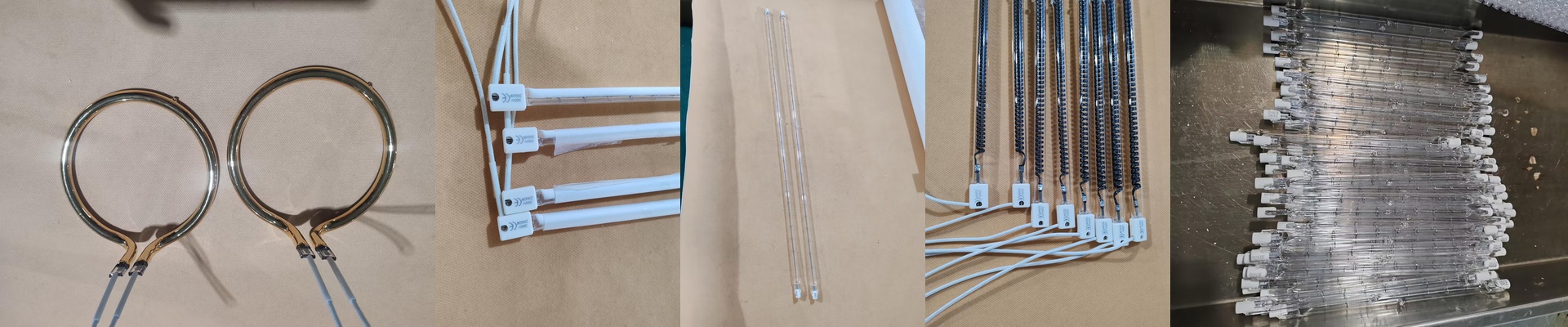
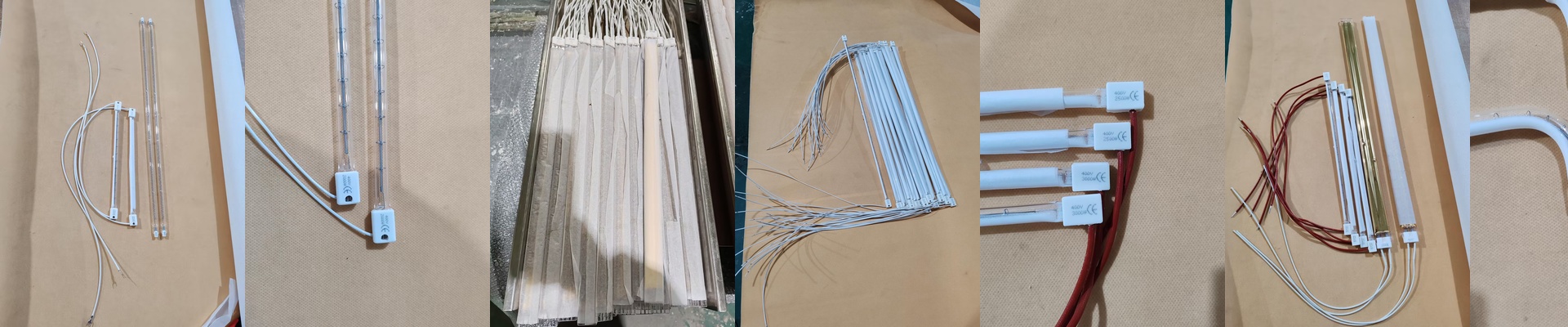
We build halogen infrared lamps with one target in mind: the dental chair. Space is tight, and heat has to show up the instant you need it. So we make these units as compact powerhouses—built to fit into curing units, warm handpieces, and dry small parts right where you’re working.
What you need is heat you can count on—steady, predictable, and tough enough to handle being switched on and off all day without getting moody. No drift. No surprises. Just performance you can feel. Here’s the thing: dental chair heaters live on a strict thermal budget, so we pack serious power into a small footprint. A typical setup is 2500W at 400V, all wrapped up in a 300mm quartz tube. That 400V rating keeps the current lower for the same wattage. In practice, that means thinner wiring and simpler routing inside the chair arm. And the 300mm length? It slips neatly into standard curing-head assemblies, spreading heat evenly without intruding toward the patient. High watt density is the whole point. It means fast warm-up and quick recovery after duty cycles. But with that intensity comes a reality check: the surrounding fixture has to be ready to manage the heat. Plan for proper airflow and keep the lamp thermally separated. If the cooling path is too small, the lamp will run hotter than it should—and that shortens its life. Inside, we run a halogen cycle within a hard-drawn quartz envelope. Quartz can take the heat, and it transmits near-infrared beautifully. The halogen regeneration keeps the filament clean, so output stays stable and the bulb doesn’t darken over time. Many versions include an internal reflective coating to push more infrared forward. That means better coupling into the optical path and less wasted heat behind the lamp. For installation, we commonly use an R7s base—double-ended, linear contact. It locks into the holder cleanly, aligns well, and gives you solid electrical contact. It’s a straightforward, serviceable design that holds up to vibration and frequent lamp swaps. In the chair, the lamp usually lives in a curing module or a localized heater block—spots where space is at a premium. The compact tube and high heat density let you put the heat exactly where you need it, without redesigning the whole arm. You get fast start-up, consistent output, and a mechanically simple lamp that can be swapped as a drop-in replacement. But yes, there’s a trade-off: that same intensity that delivers rapid heating demands a properly sized heatsink or air path. Keep the lamp at its rated voltage, and keep the operating environment dry and clean. Do that, and it will keep delivering stable performance through thousands of cycles.