Introduction
We built these shortwave infrared halogen heating lamps for one reason and one reason only: annealing high-precision plastic parts. The whole point? Get rid of internal stress before it makes your part fail. If you’re running high-precision injection molded components, you need a heat source that’s fast, controlled, and won’t scorch the surface. Our lamps were engineered from the ground up to do exactly that.
Power, Voltage, and Size: What You’re Working With
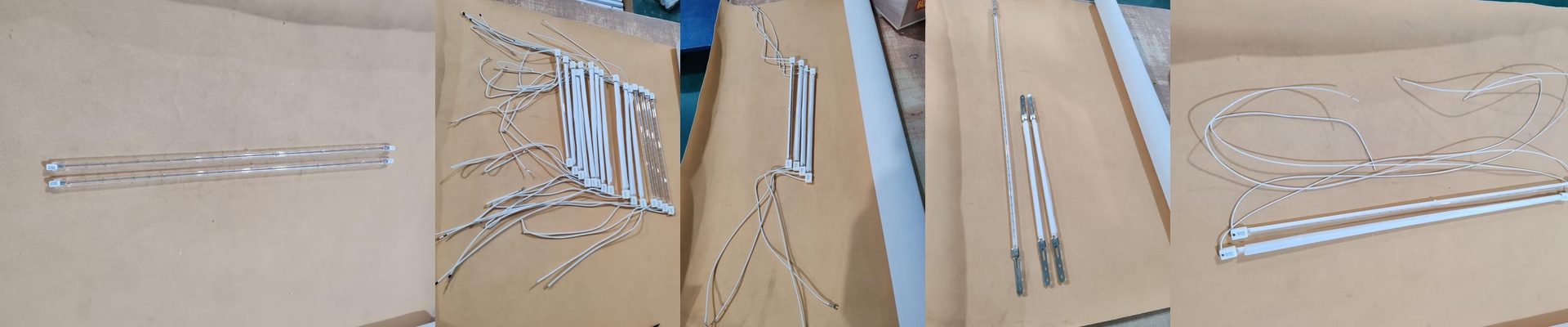
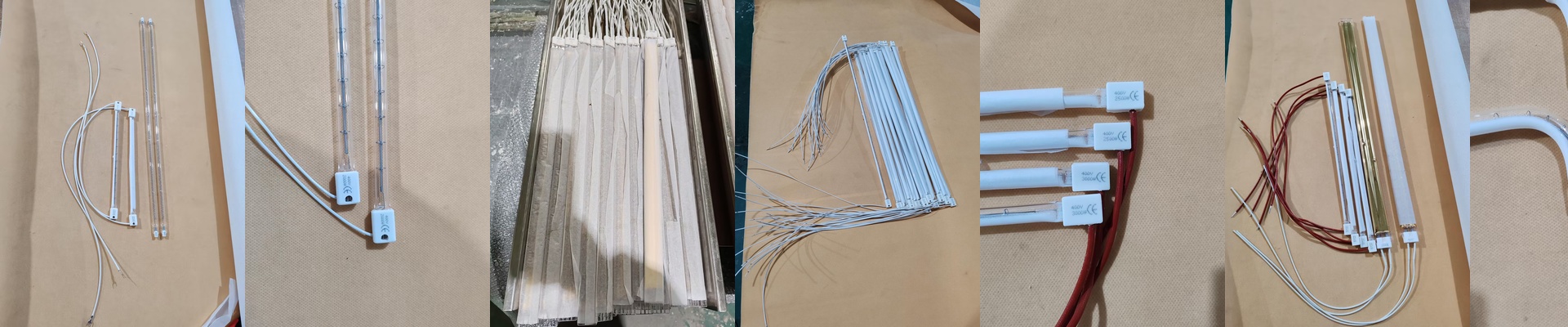
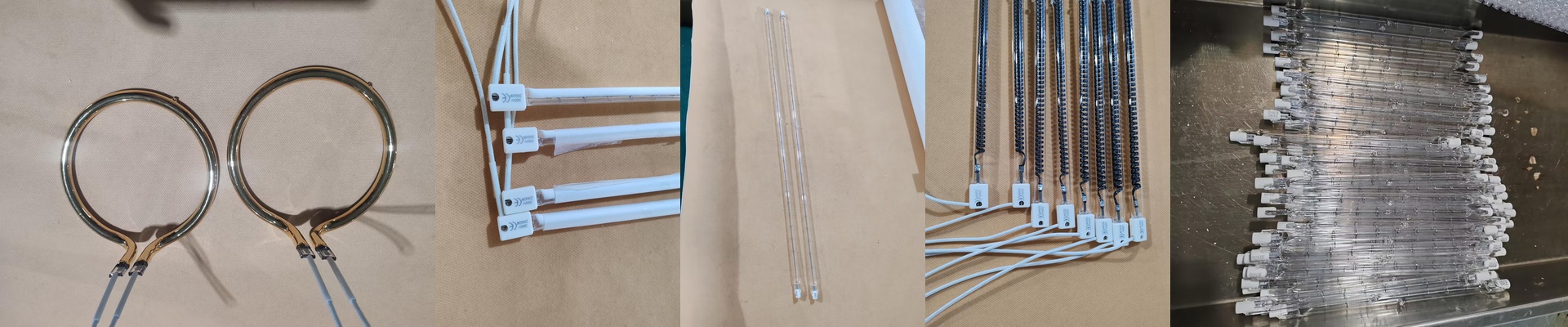
Our standard setup runs on 400V and hits 2500W, all packed into a 300mm quartz tube. This wasn’t an accident. The high voltage gives us serious power density in a small footprint, which is exactly what you need to fit into tight machine enclosures. The 300mm length gives you a focused heating zone. You get enough coverage for standard parts without wasting energy over a wide, uncontrolled area. It delivers intense heat, right away. But here’s the catch: that 2500W output throws off a lot of ambient heat. So your machine’s cooling system needs to be up to the task. If you can’t dissipate that heat, you’re risking overheating nearby electronics.
The Build: Halogen, Quartz, and a R7s Connector
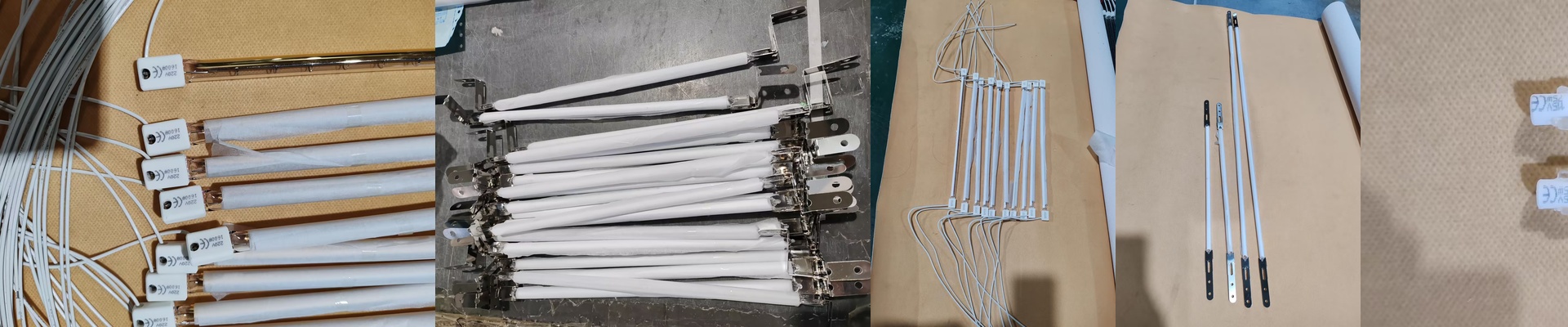
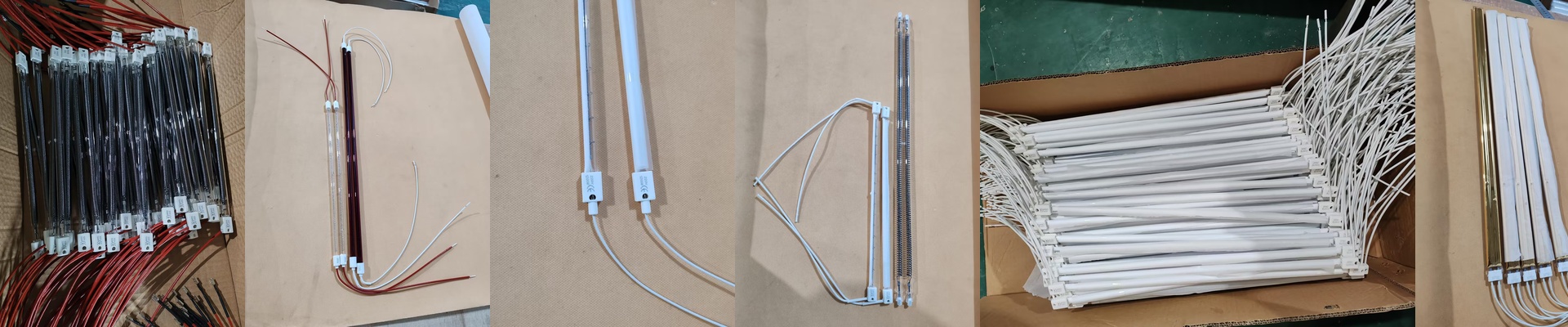
At the heart of the lamp is a shortwave infrared halogen element, sitting inside a quartz tube. Quartz is tough—it handles the thermal shock of rapid on/off cycles without cracking. The halogen element gives you fast response and steady output, so you can hit your annealing temperature quickly and hold it there. We went with an R7s connector because it’s a proven industrial standard. It handles the high current safely and makes the lamp a simple drop-in replacement. That means when a unit burns out, you swap it in without rewiring the whole system. This thing is built to hold up on a busy shop floor.
Why It Works: Stress, Cracking, and Real Results
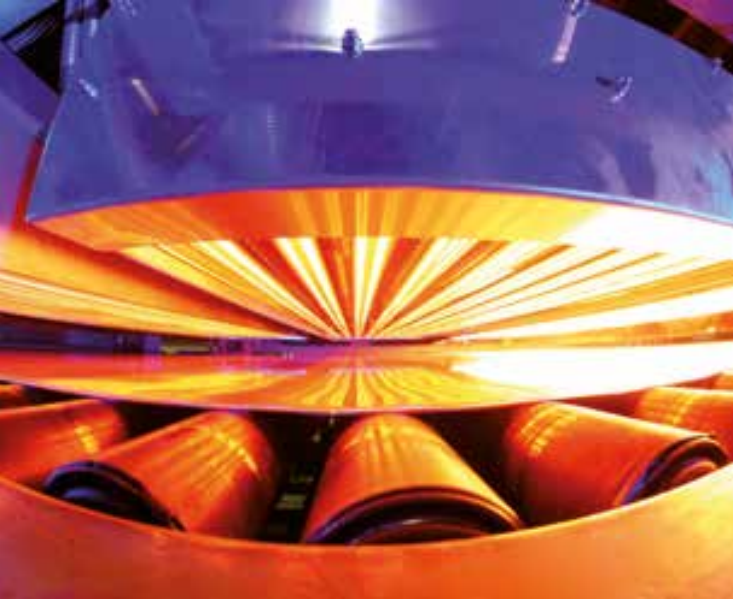
The physics are pretty straightforward. The lamp lays down rapid, even heat across the surface of the plastic part. That heat lets the polymer chains relax back into a stable state, clearing out the internal tension left over from injection molding. When you anneal parts with this controlled heat profile, you’re tackling the root cause of post-molding cracking. The payoff? Longer product life and fewer failures once the part is in the field. And because the lamp responds so quickly, your cycle times stay tight, so production keeps moving. This isn’t a general-purpose heater. It’s a precision tool built to solve one specific, costly problem. If you need to wipe out stress in your plastic parts, this is exactly the right gear for the job.