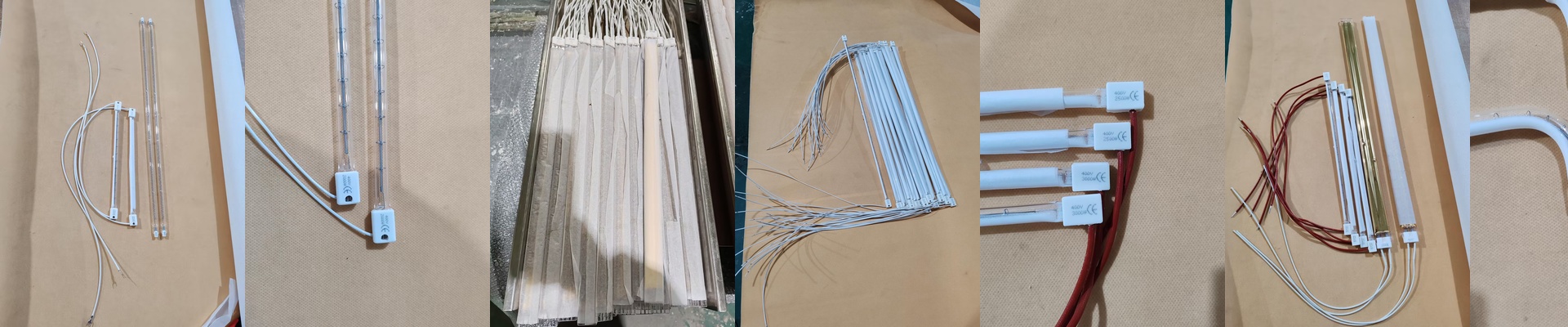
Let’s Talk About How Quartz Heaters Actually Perform
When you’re shopping for quartz heaters, the datasheet is a start. But honestly? Voltage and wattage only tell you how much power the thing pulls from the wall. They don’t tell you how that heat actually hits your product. If you want to know if a heater is actually any good, you have to look at two things: how fast it gets hot and how evenly it stays that way.
The “Warm-Up” Struggle
You might have a 2000W heater, but if it takes forever to hit operating temperature, your whole production line crawls. We look closely at the temperature rise curve. It’s all about how the filament pushes energy through the quartz. If it jumps too fast, you risk cracking the glass from thermal shock. Too slow? You’re losing money every minute you wait. You’re looking for that sweet spot—fast enough to keep things moving, but not so violent that you burn out the filament.
The Problem with Cold Spots
Here’s the thing: a lot of tubes look great in the middle but drop off at the ends. If you’re doing PET blowing or curing, those cold spots are a nightmare. They ruin your work. We map the heat across the entire length of the tube because we want a flat profile. When the heat is spread evenly, you don’t have to “over-crank” the power just to get the ends to work. That’s a huge win, because pushing too much power usually just fries the center of the lamp prematurely.
The Trade-Offs You Should Know
High heat density sounds great on paper. Pushing more wattage into a shorter tube means you can move more product. But there’s a catch. It puts a massive amount of stress on the seals and connectors. Plus, if you go for a high-output lamp, your housing needs serious airflow. If the heat just sits there and builds up, your lamps are going to die early, no matter how high the quality is. Why take my word for it? Put our tubes side-by-side with your current Henruite lamps. Forget the labels for a second and just look at the thermal map. The numbers don’t lie.